Science, Health &
Environmental Reporting
Because science is too important to leave only to scientists, and journalism is too important to leave to the scientifically illiterate.
Where Science Savvy Meets Journalistic Excellence
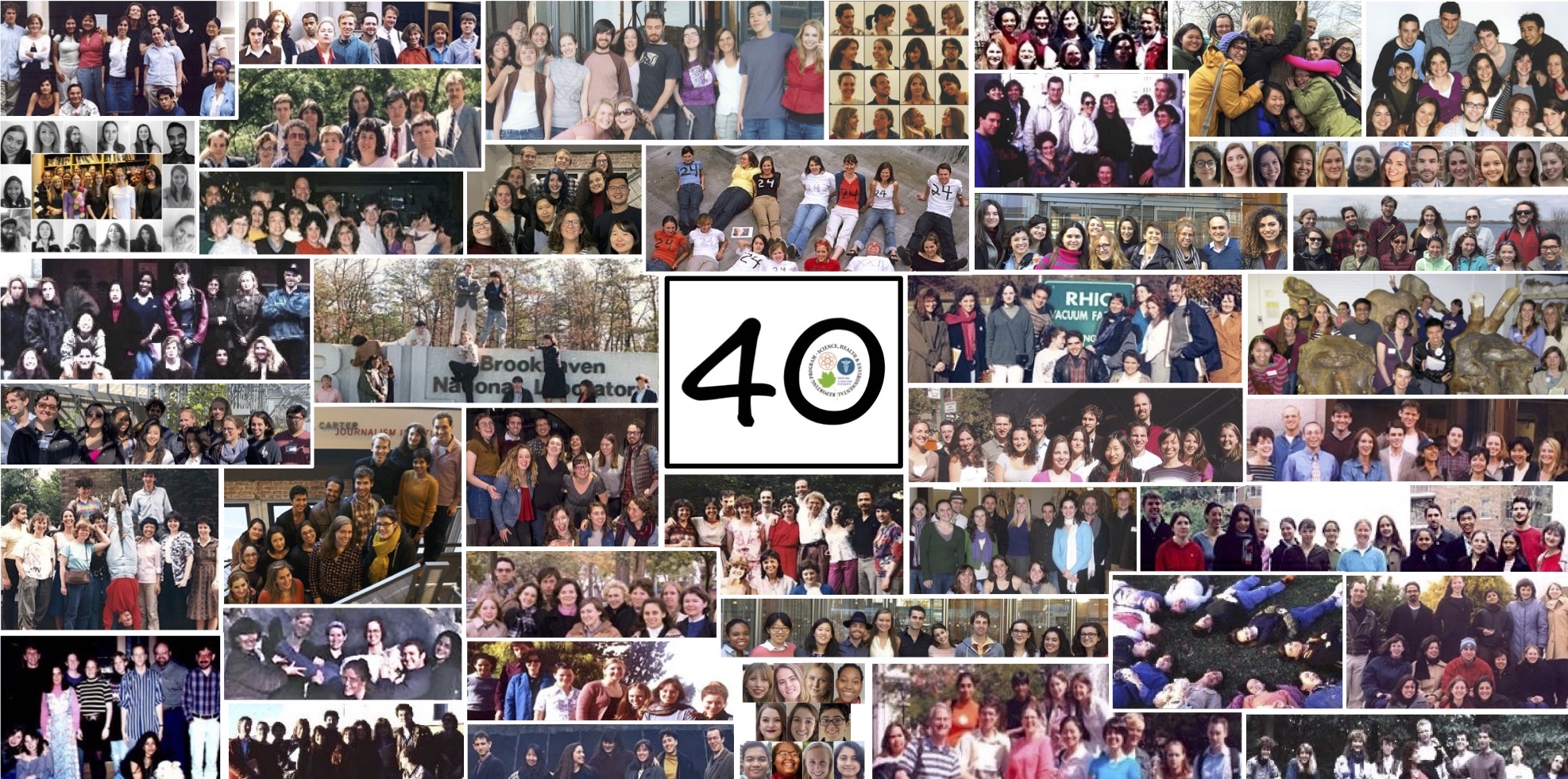
A globally renowned science journalism master’s program, the world’s oldest, we seek curious thinkers and strong writers from diverse backgrounds who share our belief that true stories well told can change the world. Building on a 45-year tradition of excellence and a tight community of highly accomplished alumni (at 503 and counting, it’s by far the largest alumni network in science journalism), we focus on the joyous work of preparing the next generation of great science storytellers committed to covering scientific, medical and environmental topics with passion and precision.
Work and Learn in the World Capital of Science Journalism
There are more opportunities for aspiring science journalists in New York than anywhere else, and SHERP is the beating heart of this community. Our curriculum consists of 11 classes (including at least one elective) over 16 months; graduates earn a Master of Arts in Journalism with a concentration in Science, Health and Environmental Reporting. Our students publish and intern at dozens of leading outlets, where their editors are often SHERP alumni. Coursework is focused squarely on learning by doing. SHERP students develop practical, high-level storytelling skills in and out of class by writing — and rewriting! — stories they then publish in professional outlets or on SHERP’s own award-winning publishing platform, Scienceline, which gets more than one million visits per year. While we consider writing, reporting and editing for text stories to be core skills, multimedia storytelling is anything but peripheral. SHERP students start recording audio just days after arriving and later add video storytelling, programming, graphics, and data-mining. Projects range from quick news stories to full-blown investigative features and even a book proposal. Every SHERP student graduates with a rich and diverse portfolio of published work. We also leverage our position in New York and at NYU, a world-class center for science research, to bring in more than 120 journalists, scientists, and other speakers each year to visit classes and take part in other SHERP events.

A Commitment to Diversity and Affordability
Central to our mission at SHERP is to serve democracy and advance social progress by diversifying the ranks of science journalism. We seek high achieving students from varied backgrounds and support them with large financial aid awards funded by NYU and by our generous donors, including foundations, alumni and friends. For the five most recent SHERP classes, the average financial aid award per enrolled student has been approximately $71,000. (This average includes only the aid we provide, not scholarships students secure on their own initiative.) The key point is this: If you think SHERP may be the right place for you, please don’t let financial concerns discourage you from applying!
An Unmatched Reputation in the Job Market
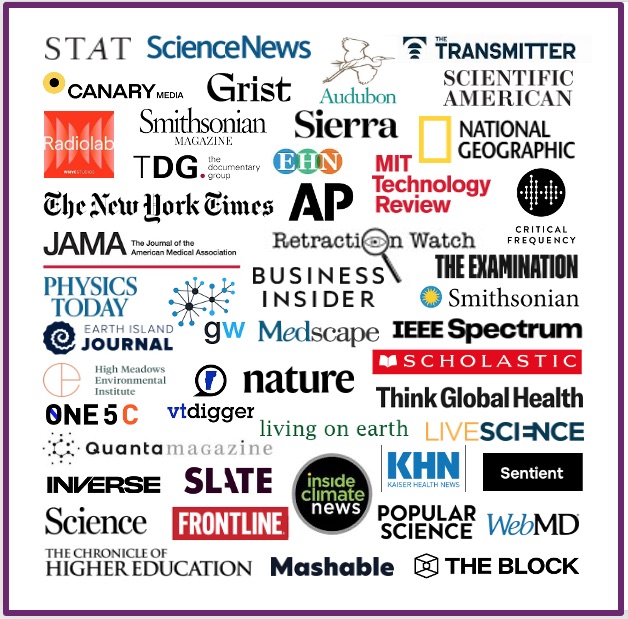
SHERP’s job placement track record is unequalled in science journalism. Our graduates are working at The New York Times, The Washington Post, The Wall Street Journal, ProPublica, Scientific American, Radiolab, MIT Technology Review, Inside Climate News, and dozens of other major outlets. With help from our faculty and alumni, every student completes at least one (and usually two) high-level internships during their time at SHERP, giving them a major leg up in the job market. We organize frequent networking events, too, including our annual Meet the Editors gathering.
An Alumni Network Spanning 43 Years and 17 Time Zones
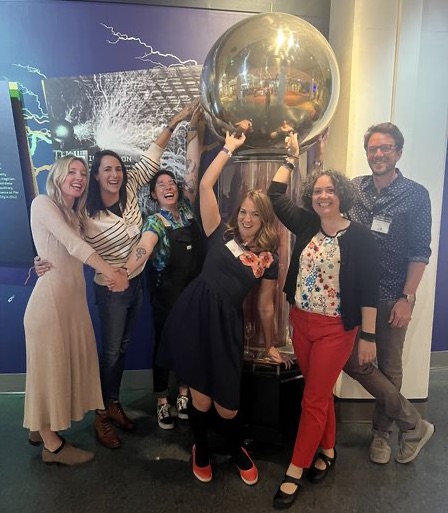
Our 503 graduates are a tight-knit group who love to engage with our current students in the classroom, in our mentorship program, at internships. and at our frequent events. (More than 200 attended our 40th anniversary celebration at the Liberty Science Center, including the happy group pictured here.) That means you’ll finish the program with not only a diverse story portfolio, a broad array of skills, and the experience of at least two high-level internships, but also connections to a network of successful journalists who understand exactly what you bring to the table.
A World-Class Faculty
Every one of our teachers is both a working science journalist and a veteran instructor, with proven records of success in and out of the classroom. Their journalism informs their teaching; their teaching informs their journalism.
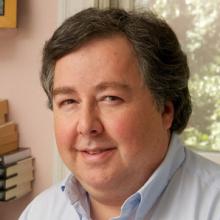
Dan Fagin
Professor | SHERP Director
Dan Fagin is the director of the Science, Health and Environmental Reporting Program, in which he teaches Environmental Reporting and Current Topics in Science, Health and Environmental Journalism. He is also the founder and director of the Science Communication Workshops at NYU.
Awarded the 2014 Pulitzer Prize for General Nonfiction, Dan’s latest book, Toms River: A Story of Science and Salvation, was described by The New York Times as “a new classic in science reporting.” A Times bestseller, Toms River also won the New York Public Library’s Helen Bernstein Book Award for Excellence in Journalism, the National Academy of Sciences’ Communication Award and the Society of Environmental Journalists’ Rachel Carson Book Award. Toms River was included in several lists of the best books of the year, including by NPR, which described Toms River as a “gripping, page-turning environmental thriller,” and by Kirkus Reviews, which called it “fascinating” and “hard-hitting.” Two Chinese language editions of Toms River were published in 2015, and it was named a Book of the Year by the Beijing News and the China Times.

Jeff DelViscio
Adjunct Faculty
Jeff DelViscio teaches video storytelling at SHERP. He is currently Chief Multimedia Editor/Executive Producer at Scientific American where he directs documentary, animation, social video and podcasts. He is a founding editor and former director of multimedia and creative at STAT, where he oversaw all visual, audio and interactive journalism. He previously spent eight years at The New York Times, where he worked on five different desks across the paper. He holds dual master’s degrees from Columbia University in journalism and in earth and environmental sciences. He has worked aboard oceanographic research vessels and tracked money and politics in science from Washington, D.C. He was a Knight Science Journalism Fellow at MIT in 2018-19.
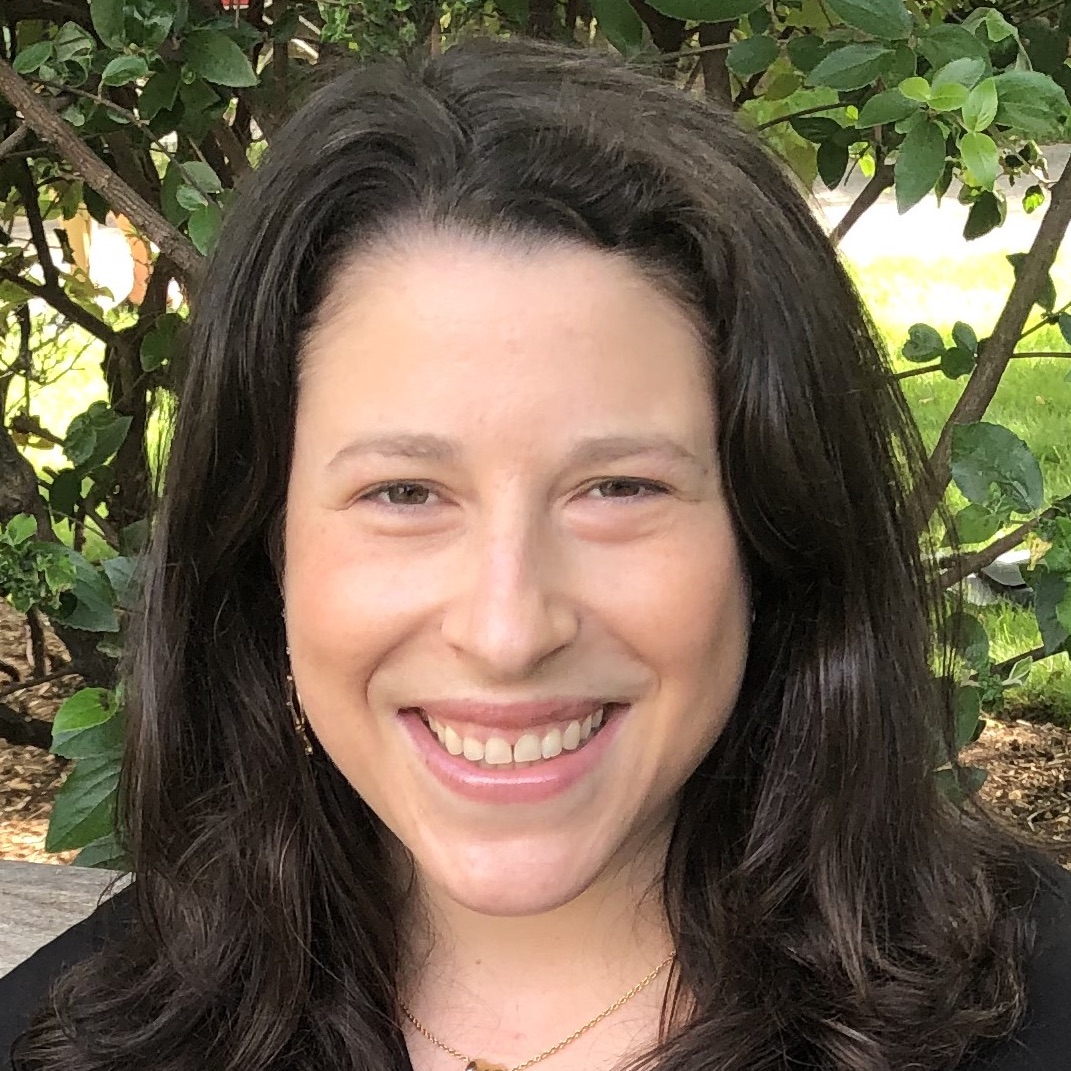
Lindsay Gellman
Adjunct Faculty
Lindsay Gellman, who teaches the Reporting II workshop at SHERP, writes about health, technology, business, and culture. Her work has been featured in The Wall Street Journal, where she was a staff reporter, as well as The New York Times, The New Yorker, The Atlantic, New York Magazine, Bloomberg Businessweek, WIRED, National Geographic, Los Angeles Review of Books, British Vogue, and on National Public Radio’s All Things Considered. Her investigative reporting on unscrupulous medical businesses has been supported by the National Institute for Health Care Management Foundation and the Knight Science Journalism Fellowship at Massachusetts Institute of Technology. She was a visiting scholar in NYU Langone’s Division of Medical Ethics, where her research focused on the medical ethics of unproven treatments for chronic conditions. She is an editor at The Dial, a new online magazine with a global focus.
Lindsay previously taught nonfiction writing as a lecturer in Yale University’s English Department. She has also contributed investigative research to bestselling journalistic book projects, including Ronan Farrow’s Catch and Kill and Brad Stone’s Amazon Unbound, and to development work for documentary films. Lindsay spent a year in Berlin as a Fulbright scholar covering technology startups and the arts. While in Germany, she also reported on exploitative cancer clinics. Her reporting was published in German and English, and triggered a law-enforcement investigation and changes to crowdfunding-platform policies. She earned a B.A. with distinction in English at Yale.
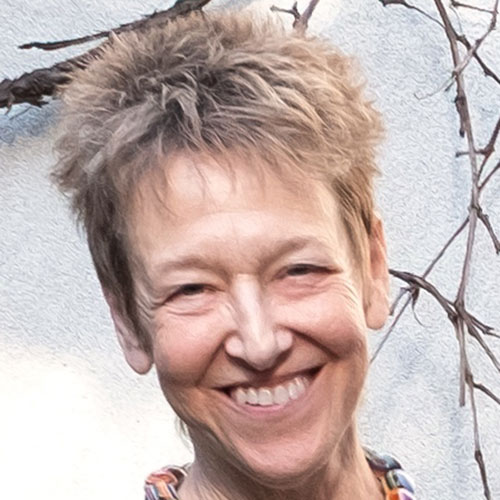
Robin Marantz Henig
Adjunct Faculty
Robin Marantz Henig, who teaches SHERP’s Reporting 1 workshop and summer class in journalism ethics, has written scores of magazine and newspaper articles and nine books, most recently Twentysomething: Why Do Young Adults Seem Stuck? (co-authored with her daughter Samantha Henig). Her previous book, Pandora’s Baby: How the First Test Tube Babies Sparked the Reproductive Revolution, was named Book of the Year by the American Society of Journalists and Authors, and won the Science in Society Award of the National Association of Science Writers. Robin’s articles have appeared regularly in The New York Times Magazine, where she is a Contributing Writer, as well as in National Geographic, Scientific American, Smithsonian, and just about every woman’s magazine in the grocery store. She writes book reviews and opinion pieces for The New York Times, The Washington Post, and BookForum, and writes about grandparenthood for The Atlantic website. From 1997 to 2002 she was a member of the board of contributors of USA Today. She served for ten years on the board of directors of the National Association of Science Writers, was its president in 2014-2016, and was co-editor of its Field Guide for Science Writers.
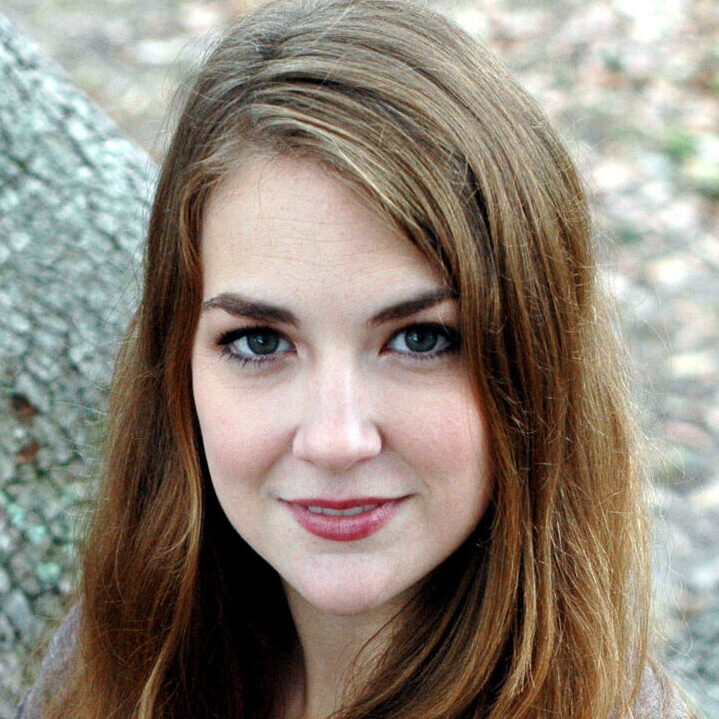
Rachel Nuwer
Adjunct Faculty | SHERP 2011
Rachel Nuwer teaches Reporting Workshop II at NYU SHERP and is also the program’s internship professor and freelance adviser. She has been a freelance science journalist since 2012 and regularly contributes to the New York Times, Scientific American, Nature and more. She is also an award-winning author. Her most recent book, I Feel Love: MDMA and the Quest for Connection in a Fractured World, explores the history, science, culture and politics of the psychedelic drug MDMA, and was named a best book of 2023 by Amazon and Scientific American. Her first book, Poached: Inside the Dark World of Wildlife Trafficking, published in 2018, took her around the world to investigate the multi-billion dollar international illegal wildlife trade. She holds master’s degrees in science journalism from NYU SHERP and applied ecology from the University of East Anglia. An avid traveller, Rachel has been to 80 countries and counting.
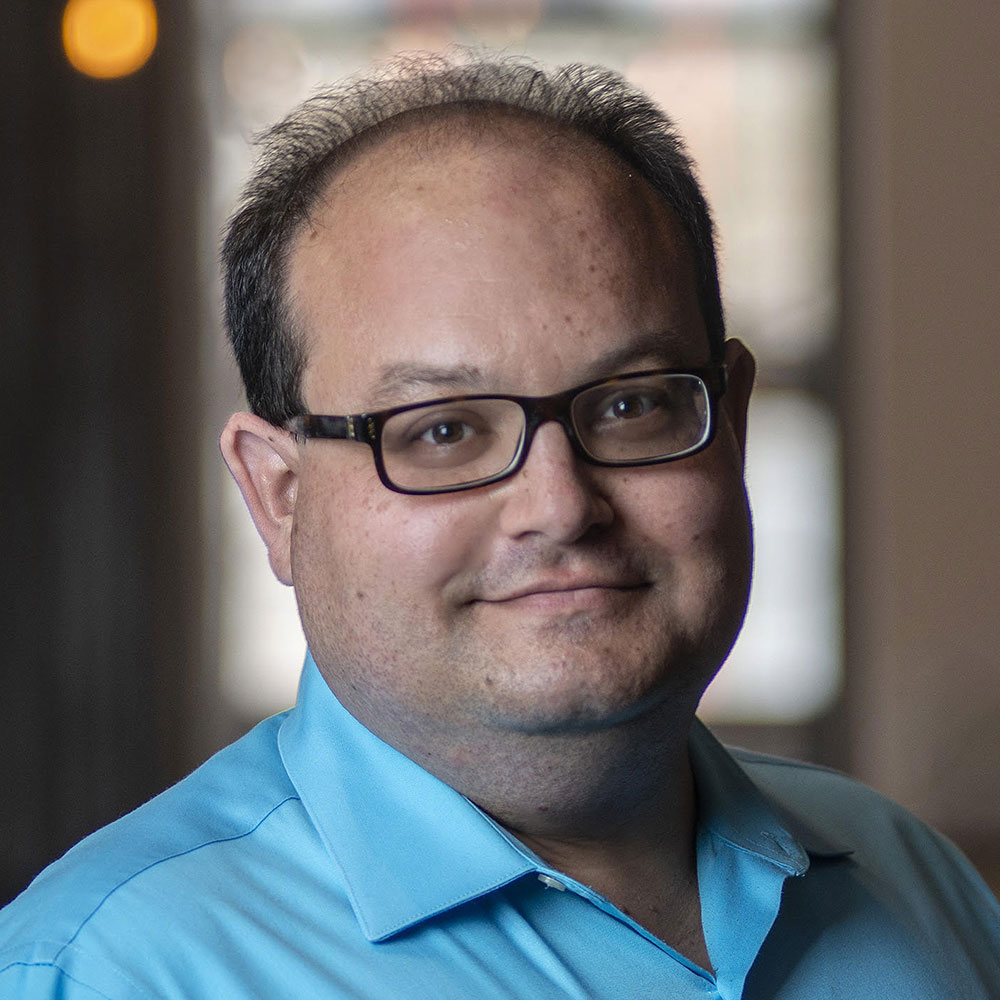
Ivan Oransky, MD
Distinguished Journalist in Residence
Ivan Oransky, MD, Distinguished Writer In Residence, has taught medical reporting in the Science, Health, and Environmental Reporting Program since 2002. He is editor in chief of The Transmitter and co-founder of Retraction Watch, a site that reports on scientific integrity, fraud, and other issues. The site’s work has been cited by news outlets including The New York Times, Wall Street Journal, and The Washington Post, and in 2020 it was named one of NewsGuard’s “Unsung Heroes” who “are models in producing content that is truthful, compelling, credible, and transparent.”
Ivan previously was vice president of editorial at Medscape, global editorial director of MedPage Today, executive editor of Reuters Health, and held editorial positions at Scientific American and The Scientist. A 2012 TEDMED speaker, he is the recipient of the 2015 John P. McGovern Medal for excellence in biomedical communication from the American Medical Writers Association, and in 2017 was awarded an honorary doctorate in civil laws from The University of the South (Sewanee). Ivan has also taught at the City University of New York Graduate School of Journalism and has written for publications from Nature to the New York Times. From 2017-2021, he served as president of the Association of Health Care Journalists.
John Rennie
Adjunct Faculty
John Rennie teaches Science Writing in the Science, Health and Environmental Reporting Program. Currently a deputy editor of Quanta Magazine, he served as editor in chief of Scientific American for almost 15 years and has been a member of its Board of Editors since 1989. In recent years, Rennie has also served as editorial director of McGraw-Hill Education’s online science reference AccessScience and has hosted the television series Hacking the Planet on The Weather Channel. He has also blogged at The Gleaming Retort for PLOS blogs and lectured widely about science topics, especially the life sciences, technology and ethical and cultural challenges of new discoveries. During his tenure at Scientific American, Rennie oversaw the modernization and expansion of that venerable magazine franchise to include new titles such as Scientific American Mind and assorted digital media. He edited the National Magazine Award-winning single-topic issues “What You Need to Know about Cancer” (Sept. 1996) and “A Matter of Time” (Sept. 2002). The Potomac Institute for Policy Studies honored him with its 2003 Navigator Award for distinguished service in support of national science and technology policy. He was also a recipient of the 2000 Sagan Award for Public Understanding of Science from the Council of Scientific Society Presidents.
Charles Seife
Professor | Director, Arthur L. Carter Journalism Institute
Before joining the Department of Journalism, Charles Seife was writer for Science magazine -specializing in physics and mathematics- and had been a U.S. correspondent for New Scientist. He holds an A.B. in mathematics from Princeton University, an M.S. in mathematics from Yale University, and an M.S. in journalism from Columbia University. His research interests include science and mathematics journalism.
Seife’s freelance work has appeared in The Economist, Scientific American, The Philadelphia Inquirer, The Washington Post, The New York Times and other publications. He is also the author of Zero: The Biography of a Dangerous Idea (2000), which won the 2000 PEN/Martha Albrand Award for First Nonfiction, as well as Alpha & Omega: The Search for the Beginning and End of the Universe (2003), Decoding the Universe: How the New Science of Information is Explaining Everything in the Cosmos, From Our Brains to Black Holes (2005), Sun in a Bottle: The Strange History of Fusion and the Science of Wishful Thinking (2008), and the forthcoming Proofiness: The Dark Arts of Mathematical Deception (2010).
Blythe Terrell
Adjunct Faculty
Blythe Terrell is an audio instructor for SHERP. She started her career in print, as a newspaper reporter and editor in Texas and Colorado, before earning her Master’s of Science in Public Health from Johns Hopkins. She then worked at FiveThirtyEight, as a general editor and then science and health editor, before moving to audio in 2017. Blythe is now supervising editor at Science Vs at Gimlet. In 2021, the show won a Gold Award from the AAAS Kavli Science Journalism Awards for its Covid-19 coverage.